
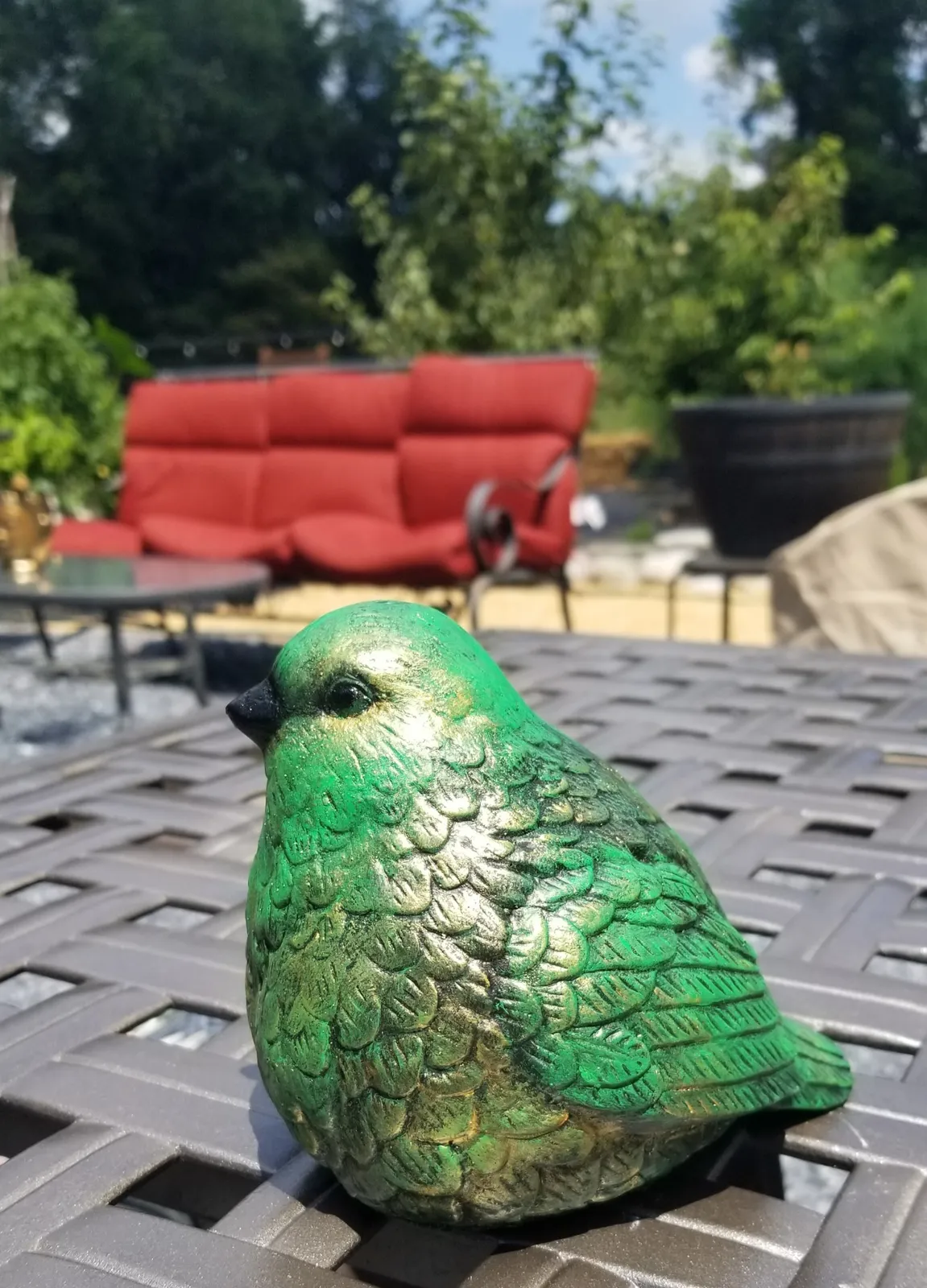
The useful idea first
A small garden figure can make a hard patio feel more personal. Learn to choose its role, test its scale and place it with plants so the space stays calm, useful and easy to care for.
What you will be able to do
- Choose a clear purpose for a small garden accent before buying or moving it.
- Test scale, views and walking space with a simple temporary mock-up.
- Pair an accent with suitable plants and a realistic maintenance plan.
Before you begin
Try these first. Notice what you already know.
Words worth knowing
- Focal point
- A feature that draws attention and gives the eye a place to rest.
- Scale
- How the size of one thing relates to the size of the surrounding space or person.
- Texture
- The visual or physical quality of a surface, such as smooth stone or fine leaves.
- Repetition
- Using a color, form or material again so different parts of the space feel related.
- Negative space
- An intentionally open area that gives nearby objects room to be seen.
Give the small object a clear reason to be there
A garden figure can be charming without being large or expensive. A bird beside a planter may add a gentle point of interest. A simple shape near a chair may help the patio feel personal. The useful starting question is what the object adds to this particular place. If its only job is to fill an empty patch, you may be solving a problem that does not exist.
Write one sentence about the effect you want. You might want a welcoming detail near the entrance, a small surprise among leaves, or a quiet feature visible from the kitchen. Each purpose suggests a different position. This keeps the object connected to your life in the space. It also makes editing easier. If a proposed position does not support the chosen purpose, you can move it on paper instead of forcing the rest of the patio to make room.
Notice the patio’s hard and soft parts
Patios often have strong surfaces: paving, walls, furniture frames and straight edges. Plants can soften that setting with leaves, shifting shapes and seasonal growth. A small piece of statuary adds another kind of form. It does not replace the plants. It joins the mix of surfaces, outlines and open space that you already see.
Stand at the main entrance and describe the patio in ordinary words. Is it mostly straight lines? Are the colors warm, cool or mixed? Do the plants have broad leaves, fine leaves or a little of both? Then notice what feels missing. A smooth, rounded figure might give relief from many sharp corners. A weathered piece might connect with an old brick wall. The goal is not to memorize design terms. It is to see what you have before adding something new.
Choose one main view first
An accent may be seen from several places, but it helps to choose one main view. This might be the doorway, the favorite chair or a window used every day. A small object cannot always be equally clear from every angle. Trying to make it do that can push it into the middle of a walkway or lead to an oversized display.
Sit or stand at the chosen viewpoint and look toward the possible location. Notice what is behind it and how far away it is. A pale object against pale paving may disappear, while the same object against darker foliage may be easy to see. Take a photograph from that viewpoint. The photo is a planning tool, not the final judge. You still need to walk through the actual space and make sure the arrangement works for people, not just the camera.
Test scale before choosing a final place
Scale is about relationships. A small bird figure can feel important beside one pot and almost vanish beside a large hedge. A larger object can feel balanced in a wide corner but crowded on a narrow step. The object’s measurement matters, yet the space around it matters just as much. A display that looks right on a store shelf can feel quite different outdoors.
Measure the object or write down its listed size. Use a cardboard shape or box to stand in for it. Check the mock-up from the main viewpoint and from nearby working positions. Do not place an unstable box where someone might trip over it. This is a short, supervised test. If the scale is wrong, try another spot before buying an additional piece. You may already have the right object and only need to give it a better setting.
Leave enough open space for the eye to rest
An open patch around an accent is not wasted space. It helps the shape be seen. When every inch contains a plant, a pot, a lantern or a figure, the small details begin to compete. The result can feel busy even if each object is attractive on its own. A quieter arrangement often comes from removing one thing rather than adding a larger focal point.
Try an editing exercise. Set up the accent, then remove nearby loose objects one at a time. Look again after each change. Does the figure become clearer? Does the path feel wider? If removing an item improves the view, consider giving that item another home. You do not need to get rid of possessions to simplify a display. Rotating a few favorites through the season can let each one be appreciated without asking the patio to show everything at once.
Pair shapes rather than collecting random pieces
A rounded figure may sit comfortably with a round container. A tall, narrow accent may relate to an upright plant. Similarities can make a group feel connected, while one clear difference can make it interesting. You do not need every object to match. You need enough relationship that the grouping looks intentional instead of accidental.
Choose one feature to repeat, such as a material, a curved outline or a muted color. Keep the rest of the choices simple. For example, a small gray bird, a plain gray pot and green foliage can form a calm group even if the objects are not identical. If you later add a bright patterned container, ask whether it supports the same idea or becomes a new competing focus. Design improves when each choice has a role instead of merely joining the collection.
Use foliage as a background with needs of its own
Plants can create a useful backdrop for statuary, but they remain living plants with their own requirements. Choose them for the light, moisture, space and temperature at the site. Do not place a sun-loving plant in deep shade simply because its leaf color looks good beside the accent. A pleasing arrangement needs plants that can keep growing there.
Look at the mature size of the foliage. A small nursery plant may eventually cover the figure or lean into a walkway. Plan how the group will look after growth, not just on the day you bring it home. If the accent is meant to appear partly hidden, decide how much should stay visible. Regularly cutting a plant back to a shape it cannot reasonably maintain may create more work than the effect is worth. A better size match can make the arrangement easier and healthier.
Protect walking routes before perfecting the view
A patio is a place people use. They carry meals, move chairs, pull hoses and walk through in different light. An accent should not make those ordinary actions harder. Keep entrances, steps, drains, gates and main paths clear. Also think about visitors who may need more room to move or who do not know the arrangement as well as you do.
Test the space with the chair pulled out, not only pushed neatly against the table. Carry an empty tray along the normal route. Notice whether the object catches a bag, narrows a turn or sits where a foot might land. If it does, move it. A design that requires people to remember a hidden obstacle is asking too much. The calm effect you want comes partly from a space that feels easy to use, so practical access is part of the appearance rather than an interruption to it.
Keep the base stable and suited to the surface
A small object can still be heavy, breakable or easy to tip. Follow the maker’s outdoor placement and support instructions. Set it on a surface that is stable and suited to the material. Avoid balancing a figure on an uneven stack of loose items simply to gain height. If a display needs a special pedestal, plan that support as carefully as the object.
Check the base after rain and after moving nearby pots. Soft ground, settling material or a shifting planter can change the support. Keep heavy objects away from edges where they might fall onto people, pets or furniture. If the placement feels uncertain, use a safer location or get suitable help. The article’s cardboard test is for visual planning, not a structural approval. You can enjoy a beautiful small feature without inventing a risky support system to make it visible from one chosen angle.
Compare materials for care as well as appearance
Stone, metal, fired clay, concrete and resin do not behave the same way outdoors. Finishes and construction details also matter. Read the care information for the actual item rather than assuming a general material name tells the whole story. An object sold for a sheltered setting may not be suited to constant wetting, freezing conditions or strong direct sun.
Before choosing, ask where the piece will spend winter and how it will be cleaned. Will you be comfortable moving it? Does it need protection that you are willing to provide? Is the finish likely to mark the surface underneath? A low-priced item can become inconvenient if it needs more attention than you want to give. On the other hand, an object you already own may work very well in a protected position. The best choice connects its care needs with a realistic routine.
An example of comparing three possible accent locations
| Example | Illustrative suitability score out of 5 |
|---|---|
| Beside the chair | 4 |
| Behind the planter | 3 |
| In the main walkway | 1 |
Watch it in practice
Design principles and plants for edible landscapes — Illinois Extension
Let color support the plants instead of competing with them
A garden accent does not need to repeat every flower color. A simple material can provide a steady background while plants change. If you choose a strong color, use it deliberately. A bright object near the doorway may become the first thing people notice, even when you hoped the flowers would lead. That is not automatically wrong, but it should be a choice.
Photograph the proposed grouping and look at it in a small view on your phone. Which shape or color do you see first? Then look at the real space again. If the accent overpowers the plants, test a different position or a more quiet background. You do not need to repaint anything immediately. Sometimes lowering an object, moving it farther into the group or removing a second bright item changes the balance enough to make the whole scene feel settled.
Remember seated eye level
A patio is often enjoyed from a chair, yet many displays are arranged while the gardener stands. A figure that looks charming from above may be hidden by a pot rim when you sit down. Conversely, a raised accent can feel too close or too dominant beside a seated person. Check the view in the way the space is normally used.
Sit in the usual chair with the furniture in its everyday position. Notice the figure’s outline and the plant shapes around it. If you must lean or stand to see the main detail, decide whether that is acceptable. A small surprise can be fun, but the feature should not require constant effort to appreciate. You may find that a modest shift to one side gives a clearer view without increasing height. This is another reason to test placement before adding a pedestal or buying a larger object.
Make a small scene without making a theme park
A little statuary can suggest a story. A bird near a planter may connect with the wildlife you watch. A simple human or animal form may reflect a memory. The story is strongest when the viewer has room to notice it. Adding signs, matching figures and many themed accessories can make the idea more literal while making the space feel less peaceful.
Choose the smallest set of elements that conveys what you enjoy. One figure, one container and a clear plant shape may be enough. If you like a collection, give it a defined area rather than spreading pieces through every path and pot. You can also change the scene occasionally. A few objects shown well often feel more personal than a large group shown all at once. The goal is to create a place you want to spend time, not to prove that every object belongs to a coordinated series.
Check how the arrangement changes with the season
Plants grow, flower, lose leaves and sometimes move indoors or into storage. The statuary may remain visible after its leafy background disappears. Think about that seasonal change before committing to a location. A figure that looks balanced in summer can become exposed beside an empty pot in winter. A moveable accent may make the transition easier.
Take a photo at the beginning and end of a season. Notice what remained useful and what began to look crowded or isolated. You may decide to keep the same location but change the container planting, or move the small figure to a sheltered winter position. This is a chance to work with seasonal change rather than fight it. A garden does not need to look identical all year. It needs a plan that respects both the living plants and the care limits of the objects.
Consider evening use without adding glare
If the patio is used after dark, check that the accent does not create an unexpected obstacle or hide a step. Existing lighting may reveal enough of it. Do not assume every garden object needs a separate spotlight. Too much light can overwhelm a small feature and change a quiet patio into a display that feels more like a shop window.
Walk through the area at the time you normally use it in the evening. Notice safe movement first, then the view. If extra lighting is needed, choose outdoor-rated equipment, use suitable installation practices and avoid cables across walking routes. Follow the product instructions and get qualified help where electrical work requires it. The aim is clear, comfortable use. A simple object can remain a gentle background detail after dark rather than becoming a bright new center of attention.
Give cleaning and watering their own space
A patio grouping should allow you to water plants and clean surfaces without dismantling the entire scene. Leave access to the potting surface, drainage area and the back of containers. Avoid placing statuary where every watering leaves it soaked if the item is not designed for that exposure. Also think about where displaced water will go.
Rehearse the care routine with an empty watering can. Can you reach the plant without knocking the figure? Can you lift the inner pot if needed? Can you sweep fallen leaves without dragging a heavy object? These checks are easy to overlook when arranging a photograph. They are also what make the real display pleasant to keep. A slightly different placement may look just as good while cutting the time and effort needed for everyday care. That is a worthwhile design improvement.
Work with a budget and an object you already own
You do not need a new purchase to begin. Try a suitable object you already have, or use a temporary stand-in to test whether the idea helps. List any real extra needs, such as a stable base, protective pads or safe storage. The full project is more than the price tag on the figure. It includes the work and space required to keep it useful.
Set a clear spending limit before browsing. Compare candidates by purpose, size, care and fit rather than by discount alone. An object is not good value if it needs a place the patio cannot provide. If none of the options fits, leave the space open for now. A quiet corner with healthy plants is already a complete design choice. Waiting for a suitable piece often leads to a better result than buying a near match just to finish the project quickly.
Use photographs to compare, not to chase perfection
Photos can reveal clutter and help you compare two arrangements. Take them from the same spot with similar framing. Try one version, move the object and photograph the second. Then compare the images beside the real experience of walking, sitting and caring for the space. The best photograph is not always the easiest arrangement to live with.
Keep a short note about why you prefer one version. You might write, “The bird is visible from the chair, and the watering route stays clear.” That statement is more useful than “this looks professional.” It connects the appearance with a practical reason. It also keeps future changes focused. If the plant grows enough to hide the figure, you can return to the original goal and adjust calmly instead of feeling that the entire garden design has failed.
Build one calm corner, then stop and enjoy it
Imagine a patio with pale paving, two green plants and a chair used for morning coffee. A small bird figure is placed beside the larger pot, where its outline shows against the leaves. Its base is stable, the chair can move freely and water can drain from the pot. One gray material is repeated in a nearby container, giving the group a quiet connection.
The gardener lives with that arrangement for a few weeks before adding anything else. The notes show that the figure is easy to see while seated, but a trailing stem begins to cover it. The solution is a small placement change, not a new collection. This is the larger lesson of a small accent. It can soften a patio by making the place feel cared for and personal. A clear purpose, healthy plants and usable space do more than a large number of decorations ever could.
Try it in your own space
Choose one place on your patio and mark the footprint of an accent with removable paper or a box. Look from the doorway, from a chair and while carrying a basket. Try two locations, photograph both and explain which one improves the space with less interference.
Your next-step checklist
- Name the accent’s purpose in one sentence.
- Measure the object and the clear space around it.
- Test the view from seated and standing positions.
- Keep paths, drains, gates and water access open.
- Confirm outdoor suitability and follow the maker’s placement instructions.
- Choose plants for the actual site, not only their color.
- Plan cleaning and winter storage before placing the object.
Check your understanding
Check your reasoning. You can try again.
References and further reading
Original teaching text by Perennial. These references provide deeper detail and local guidance.