
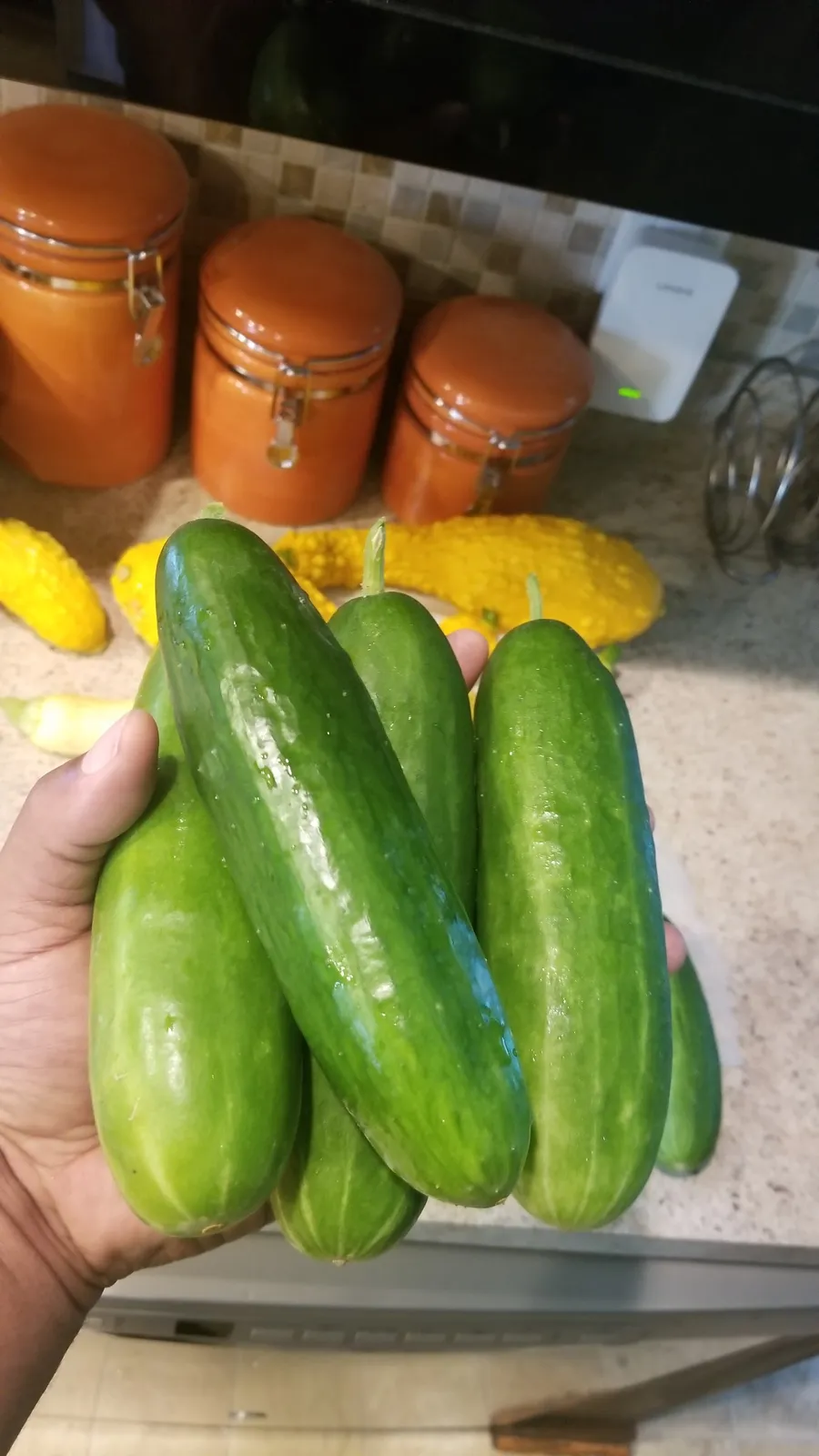
The useful idea first
A cucumber harvest starts before the fruit reaches your basket. Learn to judge each variety, pick without damaging the vine, keep a useful harvest record and move the crop into the kitchen with less waste.
What you will be able to do
- Use variety, appearance and texture to choose a practical harvest stage.
- Pick and handle cucumbers without damaging the remaining vine.
- Connect harvest notes with storage, meals and the size of next season’s planting.
Before you begin
Try these first. Notice what you already know.
Words worth knowing
- Cultivar
- A named plant selection with particular traits, such as fruit shape, size or disease resistance.
- Tendril
- A thin curling plant part that grips a support as the vine grows.
- Overmature
- Beyond the tender or useful picking stage you wanted for the crop.
- Succession
- A later planting started to spread production across a season.
- Cross-contamination
- The movement of unwanted microbes from a dirty surface or food to another food.
Begin with the cucumber you actually planted
Cucumbers do not all look alike at the best picking stage. A long slicing type, a small pickling type and a naturally pale or unusual-shaped selection can have different harvest targets. The seed packet or plant label gives you a useful starting point. If you lose that information, the first improvement is not to guess more confidently. It is to identify the selection as well as you can and keep the label next season.
Write the name beside your harvest notes. Add what you plan to do with the fruit: fresh slices, salads, sharing or a tested pickle recipe. Intended use helps you judge what useful quality means. A household that wants small crisp pickles may pick differently from one preparing fresh cucumber salads. You are not trying to grow the largest possible fruit. You are trying to collect food at a stage that suits the crop and your kitchen.
Look for a harvest stage, not a single magic measurement
A variety’s recommended size helps you know when to begin checking closely. It is not the only clue. Look at the shape, skin color and firmness expected for that variety. Consider whether the fruit is growing evenly and whether it has moved past the tender stage you want. One fruit can hide under leaves long enough to become much larger than the others.
Start checking before you think the first cucumber is ready. This lets you watch the change from a small developing fruit to a useful harvest. You do not need to measure every cucumber with a ruler. You need a repeatable idea of what you are looking for. Keep a photo or a brief note about the size your household enjoyed most. That record becomes more useful than a vague memory that last year’s cucumbers were “about this big.”
Read the vine and the fruit together
A cucumber is part of a living vine, not a separate item waiting on a shelf. Look at the leaves, stems, growing tips and root area while you check the fruit. A plant that is actively growing may produce differently from a stressed plant near the end of its season. One odd fruit does not explain the whole crop, but a repeated change can help you notice a care issue.
Take a wide look before moving leaves aside. Notice whether vines are climbing, trailing or becoming tangled. Check where you can safely stand. Then inspect fruit without pulling the vine toward you. A small habit of protecting the plant during each visit can matter as much as the picking decision itself. Broken stems and crushed leaves are preventable problems. The harvest should leave the plant in good condition for the fruit that remains.
Make the picking route easy to use
A well-planned picking route keeps you from stepping on vines or reaching awkwardly across the bed. Think about where you will stand with a basket and how you will see the far side of the plant. If cucumbers grow on a suitable support, make sure fruit can be reached safely from the path. If vines trail across the ground, keep their location clear in your mind before setting down a foot or tool.
Walk the route with an empty basket once. Is there room to turn? Does a hose lie where you need to stand? Do leaves hide the bed edge? These are small design questions with a practical effect. A crop that is frustrating to reach is easier to neglect. You may miss a harvest because the task feels inconvenient, even when you enjoy eating the cucumbers. Improving access can therefore improve the usefulness of the crop without adding more plants.
Search gently beneath the leaves
Leaves can hide fruit surprisingly well. During a harvest visit, look from more than one side rather than assuming the first visible cucumber is the whole crop. Lift or move a leaf carefully without tearing its stem. Avoid turning inspection into a rough search. The goal is to see the hidden fruit while leaving the plant’s working parts intact.
A helpful pattern is to check one section of the vine at a time. Begin at the accessible end and work along the plant from the path. Put picked cucumbers straight into the basket so you do not confuse them with fruit still attached. If children or several adults are helping, give each person a clear section and explain how to handle the vine. A calm shared routine is more efficient than several people pulling leaves in different directions to find the same hidden cucumber.
Pick with support and a clean cut
When a cucumber reaches the stage you want, hold it gently and cut the stem with a clean tool. Avoid yanking or twisting hard enough to pull on the main vine. Keep your fingers and the cutting edge in safe positions, and use a tool you can control. If the fruit is hard to reach, adjust your position rather than stretching into an unstable stance.
Place the cucumber in the basket instead of dropping it. Keep sharp tools separate from the food as you continue picking. A tool wiped after use and stored safely is easier to keep ready for the next visit. You do not need an expensive harvest kit to do this well. You need a clean cutting edge, a container that protects the food and a picking method that does not damage the plant. Good handling is a small skill worth practicing deliberately.
Build regular checks around your household routine
A cucumber that is useful today may be oversized when you return much later. How quickly that happens depends on the type, weather and growing conditions. During active production, look often enough to learn the pace of your own crop. A short visit linked to an existing habit may be easier to keep than a long garden task you repeatedly postpone.
Try checking before dinner preparation or during a morning watering visit. Bring the basket even if you expect only one cucumber. After several visits, you will know whether your crop needs a closer watch. Record dates rather than trying to remember an exact interval from someone else’s garden. The point is to avoid long gaps that turn tender fruit into unwanted large fruit. A practical routine fits your life and responds to the speed at which your plants are actually growing.
Remove an oversized fruit without calling the season a failure
Nearly every gardener misses a cucumber under the leaves. Finding an oversized fruit is a reminder to check that part of the vine, not proof that you are bad at gardening. Remove fruit that has gone beyond the quality you want, using the same careful cutting method. Then inspect nearby growth and continue with the useful harvest.
Decide whether the large fruit is suitable for a particular kitchen use based on its condition and quality, not just its size. Do not feel required to eat poor food to prove that nothing was wasted. If a fruit is spoiled, discard it appropriately. Make a simple note about where it hid or how long you were away. That detail can lead to a real improvement, such as checking the back of a support or asking a neighbor to pick during a trip.
Treat a misshapen cucumber as a clue to investigate
Fruit shape can reflect the variety, pollination, growing conditions or other influences. A curved or uneven cucumber is not automatically unsafe or a sign of a serious disease. Start by comparing it with the normal shape for the selection. Look at whether the change affects one fruit or many, and whether the plant shows other symptoms.
Take a photograph before cutting the fruit open for normal kitchen evaluation. Record the date, recent weather and any relevant care change. If several young fruit fail or repeatedly develop unevenly, investigate the crop’s pollination needs and growing conditions. A flower garden may support visitors, but it does not guarantee each cucumber flower develops successfully. Use the video as a way to learn about pollinator support, then return to crop-specific guidance for the cucumber itself. Several clues together are more useful than a confident guess from shape alone.
Link moisture records with harvest quality
Cucumber care and cucumber harvest are connected. Changes in water supply can affect how plants grow and how the crop performs. Yet seeing one disappointing fruit does not tell you exactly how much water to add. Check the soil, recent rainfall and the condition of the plant before deciding what it needs. A container and a garden bed can dry at very different rates.
Use one line in your log for a major watering or a heavy rain. When you later record quality, those notes give useful context. They do not prove a cause by themselves, but they help you ask better questions. For example, “The smaller harvest followed a very dry week” is a clearer observation than “the plant stopped caring.” Keep the root zone appropriately supplied and avoid flooding already wet soil. The useful goal is steady care matched to the site, not repeated dramatic corrections.
A fictional cucumber harvest and use log
| Example | Example cucumber count |
|---|---|
| Picked | 12 |
| Used fresh | 8 |
| Shared | 4 |
Watch it in practice
Pollinator Gardens: Plant Selection and Garden Care — UW Extension
Notice flavor without making unsafe assumptions
A cucumber harvest is meant to become enjoyable food. Prepare a small normal sample as you would for a meal, and pay attention to quality. If a cucumber has an unusually strong bitter taste, do not keep eating it or serve it as a challenge. Discard fruit that tastes extremely bitter. A different dressing, more salt or longer cooking is not a sound plan for making uncertain produce acceptable.
Also separate flavor from spoilage. Slimy, moldy or badly decayed produce belongs out of the meal. Do not taste spoiled fruit to decide whether it is safe. If a repeated flavor issue appears, record the variety and growing conditions and consult reliable crop guidance. The right garden response may involve care, timing or next year’s selection. The immediate kitchen response is simpler: use sound produce of acceptable quality and do not force a questionable fruit into a recipe just because you grew it.
Keep the harvest shaded while you work
A basket left in hot sun can make a fresh harvest lose quality while you finish another garden task. Choose a shaded place for the picked cucumbers and move them toward suitable storage after harvesting. Avoid leaving food in a hot vehicle or beside a heat source. Protect it from soil splashes, dirty tools and pets while it waits.
If the harvest is large, handle it in manageable batches. A shallow clean container can make it easier to see the condition of the fruit than a deep heap that hides damage. Do not stack so much produce that the lower fruit is crushed. These actions are not complicated, but they support the quality you worked to grow. A cucumber’s journey into the kitchen is part of the gardening task, not an unrelated chore that begins after all the interesting work is finished.
Give storage a purpose and a short plan
Fresh cucumbers are not a permanent storage crop. Move them to suitable refrigerated storage and plan to use them soon. Keep them protected from drying and damage while avoiding a wet, neglected pile. Check the condition of stored produce rather than assuming the refrigerator stops all change. Remove spoiled items so they do not become hidden under the next harvest.
Write a simple use plan on a note or in the garden log. “Two for tonight’s salad, three to share tomorrow, the rest for a tested refrigerator-pickle recipe” is enough. The plan does not need to become a spreadsheet unless you enjoy that. It only needs to connect a perishable crop with a realistic next use. This habit is especially helpful during a busy week, when the problem is not growing enough food but remembering what is already waiting in the kitchen.
Clean food and tools at the right stage
Use clean hands, a clean cutting surface and clean utensils when you prepare cucumbers. Rinse produce under running water before cutting or eating it, and follow reliable food-handling guidance. Do not use soap on produce. Keep garden soil and dirty harvest tools away from the area where ready-to-eat food is being prepared.
Think through the route from basket to meal. If you set a soil-covered basket on the counter, clean that surface before preparing food there. If a knife was used for another raw food, clean it appropriately before using it on the cucumber. These are ordinary kitchen habits, but the pride of a fresh garden harvest can make people forget that it is still food that needs sound handling. A beautiful cucumber is not exempt from basic cleanliness simply because you know the person who grew it.
Use preservation recipes that were designed for safety
Pickling is a way to enjoy cucumbers beyond a fresh meal, but shelf-stable preservation needs a tested recipe and process. Use a current reliable source such as the National Center for Home Food Preservation or your Extension service. Follow the specified ingredient strengths, quantities, jar size and processing directions. Do not turn a family memory or a social-media shortcut into a safety rule.
Separate refrigerator pickles from products processed for room-temperature storage. A jar that looks sealed is not proof that an improvised recipe is safe. Label the product and use the storage directions that go with the tested recipe. If you want a different flavor, look for a tested variation rather than changing important proportions on your own. Planning before harvest also helps: you can gather the correct ingredients and equipment without leaving a large batch of cucumbers waiting while you search for instructions.
Share a crop in a way that helps the receiver
Sharing is most useful when it respects what another person can store and use. Ask whether someone wants cucumbers before leaving a large bag at their door. Offer a manageable amount, and give a short note about when it was picked. Keep the produce protected during transport. A generous harvest should feel like a welcome gift, not a new responsibility someone did not choose.
If you share with a community group or pantry, check its produce guidelines first. It may have rules about condition, packaging or delivery times. Record what you shared alongside what your household used. That makes your harvest record more complete. You may discover that growing a little extra for a willing neighbor is one of the best parts of the season. Or you may find that a smaller planting would reduce unwanted surplus. Both are useful lessons.
Count usefulness, not just weight
A total harvest weight can be interesting, but it is only one measure of success. Tender fruit used in meals, produce shared gladly and time spent harvesting all matter. A large crop that spoils in the refrigerator is not automatically a better result than a modest crop that fits the household well. Choose a measure that answers a real planning question.
Try a small table with three columns: picked, used and shared. Add a note about waste if it happens, without turning the log into a judgment. You are collecting information so that next year’s garden can fit better. The fictional chart in this article shows a simple example. Its numbers are not a promise of what a plant will produce. They show how a record can connect the garden with the kitchen. Your own entries will reflect your variety, season, care and household preferences.
Adjust the next planting from the record
At the end of the main harvest, read your notes before ordering more seed. Did you have enough cucumbers for the meals you wanted? Were several fruit repeatedly missed? Was the support hard to reach? Did the crop arrive all at once during a busy period? These questions turn a season’s experience into a practical plan.
Choose one or two changes rather than redesigning everything at once. You might improve access, choose a different type, grow fewer plants or try a small later planting where the season allows. Keep the useful parts of the old plan so you can tell what the change did. The trip from vine to counter teaches you about more than picking. It shows how plant care, timing, household routines and design work together. A good harvest is one you can collect safely, use with pleasure and learn from afterward.
Try it in your own space
For three harvests, record the variety, number picked, approximate picking size and intended use. Add a note after the cucumbers are used or shared. Identify one change that would reduce waste without reducing the food your household enjoys.
Your next-step checklist
- Keep the variety label and its picking guidance.
- Look under leaves without stepping on or pulling the vine.
- Use a clean cutting tool and support each fruit.
- Keep harvested produce shaded and move it to suitable storage.
- Wash produce under running water before preparing it.
- Use tested preservation directions if you make shelf-stable pickles.
Check your understanding
Check your reasoning. You can try again.
References and further reading
Original teaching text by Perennial. These references provide deeper detail and local guidance.